Showing posts with label Civil Jobs. Show all posts

Wednesday, December 6, 2017

DANEM ENGINEERING KSA/QATAR/BAHRIAN ENGINEERS..DRIVERS

DANEM ENGINEERING KSA/QATAR/BAHRIAN ENGINEERS..DRIVERS


Getting a job in one of the Gulf Cooperative Council (GCC) member Countries, is not an easy process due to the increase of available talent in the region, the specialized experience required by employers, the formal / informal quotas on nationalities, the location of the candidate and employer, employer visa regulations, salary budgets sometimes linked to human capital markets, and other variables. The following tips will help you get the job you want in the GCC.
  1. Have a strategy and solid plan. Someone once said, “finding a job is a full-time job”, only you can get the job you want, don’t depend on others to get it for you. Develop a strategy, plan and execute it every day and make it count! Read about the latest tips, invest in yourself and if you need additional support, get it!
  2. Make sure your CV is up to mark. Review the content of your CV, present the most updated and relevant information, and remove outdated accomplishments that are no longer relevant. You are not writing a book, make the CV short, no more than 2 pages, and don’t cram information since it will make it difficult to read. Remove graphics such as logos which distract from the content. Don’t use bright colours or patterns. For GCC employers, include information such as your nationality, age, marital status, availability, reason for leaving employers, and introduce your employers.
  3. Stand out from the crowd. Sending your CV by email and asking to be contacted is not the most effective way to get a job. You need to network, you need to research the companies that are hiring, contact them, and ensure they review your profiles. You must find a way to contact the hiring decision makers and provide a brief summary of your experience through a phone call, a video, or in writing by email. The message needs to be no longer than 60 seconds and should state why you are the best person for the vacancy as well as request a meeting.
  4. Use your network and that of others you know. People are usually willing to help out a friend, a colleague, or an acquaintance so use the networks you have access to. To receive help, you must also give to others so share your knowledge, mentor others, help others reach a contact, and when you are in need, it will be easier to ask.
  5. Visit the country. If you are not in the country, visiting the country you are targeting can be an effective way of increasing your network, meeting employers and confirming that you are interested in working in the new environment. It’s not a holiday though, so you need to have a solid plan and objectives to be accomplished during your stay.
  6. Update your online profile, including your LinkedIn profile. Today, visuals and video presentations are easily accessible and can make a strong impact on employers and your network.
  7. Engage your employment references early. This means reconnecting with them, informing them that you are seeking new employment, and getting their advice and support if possible in your job search. You don’t want to be contacting your references only when you need them.
MGR Management Consulting (MGRMC) is a professional recruitment firm specialising in human capital global sourcing. The company is of Canadian origin now operating from Dubai, United Arab Emirates from the prestigious Jumeirah Lakes Towers Free Zone. MGRMC serves international clients by recruiting and engaging the best and brightest people for their business. The writer, Christians Cruz, is the Managing Director of MGR Management Consulting, and has more than 17 years experience providing talent acquisition and human capital solutions in Canada, and now, the GCC

Saturday, November 25, 2017

Saudi Arabia Required Engineers

Saudi Arabia Required Engineers


9 steps to get a job abroad!

The recruitment process normally contains 9 steps. In particular situations the process can differ as each client has their own methods and procedures. Below you will find the general steps which should be taken:

Step 1: Apply / Submit CV


The candidate is interested in working abroad and applies for a certain position by submitting their CV.

Step 2: Initial screening interview by telephone

A Globaljobbing consultant will contact you by telephone for an initial screening interview. During this conversation we aim to learn more about your experiences, requirements, ambitions and goals whilst working abroad. We also discuss our vacancies and career opportunities with you. If a match is found and both parties are interested, we arrange an intake interview.

Step 3: Intake interview

The intake interview has 2 objectives:
1: During this interview we want to learn who you are, what you can, what you would like to do and what your ideal company culture would be. The consultant will find out more about your personality, ambitions, motivation and your talent. A test could be part of the recruitment process.
2: At the same time we discuss the vacancies and career opportunities with the candidate. We give you more details about the jobs, clients, procedures, company cultures, practical issues, relocation, salaries and benefits. After the interview the candidate informs the consultant for which position they would like to apply for.

Step 4: Introducing the candidate to the client

If both parties are positive and confident about the application, Globaljobbing will introduce the candidate to the client by sending over your resume and personal notes. We then wait for feedback from the client.

Step 5: Recruitment process with the client

The continuation of the procedure depends on the client. Every company has their own methods ad procedures. But usually the candidate must expect to have at least 1 or 2 telephone interviews and typically complete a language, soft skills and computer literacy test. Occasionally a candidate will be invited to attend a face to face interview in The Netherlands, Belgium or at client’s location abroad. It goes without saying that Globaljobbing will guide and support you during the whole application process.

Step 6: Job offer

If you’re application was successful and the client has chosen to hire you, you will receive a job offer directly from them. Congratulations! A date of commencement will be determined.

Step 7: Preparation

To make a good start in your new country, preparation is very crucial. We guide and support you with your flight ticket, accommodation, banking, insurances, tax and Visa. Assisting you with your relocation is very important for Globaljobbing, we try to make sure that everything works out smoothly. Making a good and fresh start reflects on the rest of your stay abroad.

Step 8: Your first day at work

Most of the candidates arrive in their new country 1-4 days prior the start of their new job. Now you have a couple of days to acclimatise and explore your new city. Then finally your first working day starts! We make sure that you will receive all the details about your first day; location, time, contact person and dress code. First you will start with an induction which takes between 1-2 days. During the induction the company will give you more information about the country, city, surrounding, the company itself, company rules and other practical issues. Then your extensive training will start in which you learn everything about the position: the products, services, systems, customers, communication, administration, procedures, guidelines, structures and your new team! After training is complete you are ready to start your new job!

Step 9: Enjoy

At the beginning everything is new to you. Your job, company, surroundings, people, sports and social life. Lots of social things are happening and you will meet a lot of new people so theres plenty of time to relax and to enjoy.You can learn a lot as well, most of the companies offer great career opportunities such as training courses and projects, which give you the chance to grow within the company.

After the placement

Once the candidate has successfully secured a position, your consultant will contact you regularly to ensure that the job is going well and you’re comfortable and happy. We care and want to know how your role is really going, if you have any reservations or concerns you must let us know, as a successful placement needs to satisfy both parties
UAE/KSA/QATAR

UAE/KSA/QATAR


9 steps to get a job abroad!

The recruitment process normally contains 9 steps. In particular situations the process can differ as each client has their own methods and procedures. Below you will find the general steps which should be taken:

Step 1: Apply / Submit CV


The candidate is interested in working abroad and applies for a certain position by submitting their CV.

Step 2: Initial screening interview by telephone

A Globaljobbing consultant will contact you by telephone for an initial screening interview. During this conversation we aim to learn more about your experiences, requirements, ambitions and goals whilst working abroad. We also discuss our vacancies and career opportunities with you. If a match is found and both parties are interested, we arrange an intake interview.

Step 3: Intake interview

The intake interview has 2 objectives:
1: During this interview we want to learn who you are, what you can, what you would like to do and what your ideal company culture would be. The consultant will find out more about your personality, ambitions, motivation and your talent. A test could be part of the recruitment process.
2: At the same time we discuss the vacancies and career opportunities with the candidate. We give you more details about the jobs, clients, procedures, company cultures, practical issues, relocation, salaries and benefits. After the interview the candidate informs the consultant for which position they would like to apply for.

Step 4: Introducing the candidate to the client

If both parties are positive and confident about the application, Globaljobbing will introduce the candidate to the client by sending over your resume and personal notes. We then wait for feedback from the client.

Step 5: Recruitment process with the client

The continuation of the procedure depends on the client. Every company has their own methods ad procedures. But usually the candidate must expect to have at least 1 or 2 telephone interviews and typically complete a language, soft skills and computer literacy test. Occasionally a candidate will be invited to attend a face to face interview in The Netherlands, Belgium or at client’s location abroad. It goes without saying that Globaljobbing will guide and support you during the whole application process.

Step 6: Job offer

If you’re application was successful and the client has chosen to hire you, you will receive a job offer directly from them. Congratulations! A date of commencement will be determined.

Step 7: Preparation

To make a good start in your new country, preparation is very crucial. We guide and support you with your flight ticket, accommodation, banking, insurances, tax and Visa. Assisting you with your relocation is very important for Globaljobbing, we try to make sure that everything works out smoothly. Making a good and fresh start reflects on the rest of your stay abroad.

Step 8: Your first day at work

Most of the candidates arrive in their new country 1-4 days prior the start of their new job. Now you have a couple of days to acclimatise and explore your new city. Then finally your first working day starts! We make sure that you will receive all the details about your first day; location, time, contact person and dress code. First you will start with an induction which takes between 1-2 days. During the induction the company will give you more information about the country, city, surrounding, the company itself, company rules and other practical issues. Then your extensive training will start in which you learn everything about the position: the products, services, systems, customers, communication, administration, procedures, guidelines, structures and your new team! After training is complete you are ready to start your new job!

Step 9: Enjoy

At the beginning everything is new to you. Your job, company, surroundings, people, sports and social life. Lots of social things are happening and you will meet a lot of new people so theres plenty of time to relax and to enjoy.You can learn a lot as well, most of the companies offer great career opportunities such as training courses and projects, which give you the chance to grow within the company.

After the placement

Once the candidate has successfully secured a position, your consultant will contact you regularly to ensure that the job is going well and you’re comfortable and happy. We care and want to know how your role is really going, if you have any reservations or concerns you must let us know, as a successful placement needs to satisfy both parties
Urgently Required  Largest Petrochemical Co

Urgently Required Largest Petrochemical Co

Oo

9 steps to get a job abroad!

The recruitment process normally contains 9 steps. In particular situations the process can differ as each client has their own methods and procedures. Below you will find the general steps which should be taken:

Step 1: Apply / Submit CV

The candidate is interested in working abroad and applies for a certain position by submitting their CV.

Step 2: Initial screening interview by telephone

A Globaljobbing consultant will contact you by telephone for an initial screening interview. During this conversation we aim to learn more about your experiences, requirements, ambitions and goals whilst working abroad. We also discuss our vacancies and career opportunities with you. If a match is found and both parties are interested, we arrange an intake interview.

Step 3: Intake interview

The intake interview has 2 objectives:
1: During this interview we want to learn who you are, what you can, what you would like to do and what your ideal company culture would be. The consultant will find out more about your personality, ambitions, motivation and your talent. A test could be part of the recruitment process.
2: At the same time we discuss the vacancies and career opportunities with the candidate. We give you more details about the jobs, clients, procedures, company cultures, practical issues, relocation, salaries and benefits. After the interview the candidate informs the consultant for which position they would like to apply for.

Step 4: Introducing the candidate to the client

If both parties are positive and confident about the application, Globaljobbing will introduce the candidate to the client by sending over your resume and personal notes. We then wait for feedback from the client.

Step 5: Recruitment process with the client

The continuation of the procedure depends on the client. Every company has their own methods ad procedures. But usually the candidate must expect to have at least 1 or 2 telephone interviews and typically complete a language, soft skills and computer literacy test. Occasionally a candidate will be invited to attend a face to face interview in The Netherlands, Belgium or at client’s location abroad. It goes without saying that Globaljobbing will guide and support you during the whole application process.

Step 6: Job offer

If you’re application was successful and the client has chosen to hire you, you will receive a job offer directly from them. Congratulations! A date of commencement will be determined.

Step 7: Preparation

To make a good start in your new country, preparation is very crucial. We guide and support you with your flight ticket, accommodation, banking, insurances, tax and Visa. Assisting you with your relocation is very important for Globaljobbing, we try to make sure that everything works out smoothly. Making a good and fresh start reflects on the rest of your stay abroad.

Step 8: Your first day at work

Most of the candidates arrive in their new country 1-4 days prior the start of their new job. Now you have a couple of days to acclimatise and explore your new city. Then finally your first working day starts! We make sure that you will receive all the details about your first day; location, time, contact person and dress code. First you will start with an induction which takes between 1-2 days. During the induction the company will give you more information about the country, city, surrounding, the company itself, company rules and other practical issues. Then your extensive training will start in which you learn everything about the position: the products, services, systems, customers, communication, administration, procedures, guidelines, structures and your new team! After training is complete you are ready to start your new job!

Step 9: Enjoy

At the beginning everything is new to you. Your job, company, surroundings, people, sports and social life. Lots of social things are happening and you will meet a lot of new people so theres plenty of time to relax and to enjoy.You can learn a lot as well, most of the companies offer great career opportunities such as training courses and projects, which give you the chance to grow within the company.

After the placement

Once the candidate has successfully secured a position, your consultant will contact you regularly to ensure that the job is going well and you’re comfortable and happy. We care and want to know how your role is really going, if you have any reservations or concerns you must let us know, as a successful placement needs to satisfy both parties

Tuesday, November 21, 2017

JOB OPPORTUNITIES FOR KSA

JOB OPPORTUNITIES FOR KSA


Getting a job in one of the Gulf Cooperative Council (GCC) member Countries, is not an easy process due to the increase of available talent in the region, the specialized experience required by employers, the formal / informal quotas on nationalities, the location of the candidate and employer, employer visa regulations, salary budgets sometimes linked to human capital markets, and other variables. The following tips will help you get the job you want in the GCC.
  1. Have a strategy and solid plan. Someone once said, “finding a job is a full-time job”, only you can get the job you want, don’t depend on others to get it for you. Develop a strategy, plan and execute it every day and make it count! Read about the latest tips, invest in yourself and if you need additional support, get it!
  2. Make sure your CV is up to mark. Review the content of your CV, present the most updated and relevant information, and remove outdated accomplishments that are no longer relevant. You are not writing a book, make the CV short, no more than 2 pages, and don’t cram information since it will make it difficult to read. Remove graphics such as logos which distract from the content. Don’t use bright colours or patterns. For GCC employers, include information such as your nationality, age, marital status, availability, reason for leaving employers, and introduce your employers.
  3. Stand out from the crowd. Sending your CV by email and asking to be contacted is not the most effective way to get a job. You need to network, you need to research the companies that are hiring, contact them, and ensure they review your profiles. You must find a way to contact the hiring decision makers and provide a brief summary of your experience through a phone call, a video, or in writing by email. The message needs to be no longer than 60 seconds and should state why you are the best person for the vacancy as well as request a meeting.
  4. Use your network and that of others you know. People are usually willing to help out a friend, a colleague, or an acquaintance so use the networks you have access to. To receive help, you must also give to others so share your knowledge, mentor others, help others reach a contact, and when you are in need, it will be easier to ask.
  5. Visit the country. If you are not in the country, visiting the country you are targeting can be an effective way of increasing your network, meeting employers and confirming that you are interested in working in the new environment. It’s not a holiday though, so you need to have a solid plan and objectives to be accomplished during your stay.
  6. Update your online profile, including your LinkedIn profile. Today, visuals and video presentations are easily accessible and can make a strong impact on employers and your network.
  7. Engage your employment references early. This means reconnecting with them, informing them that you are seeking new employment, and getting their advice and support if possible in your job search. You don’t want to be contacting your references only when you need them.
MGR Management Consulting (MGRMC) is a professional recruitment firm specialising in human capital global sourcing. The company is of Canadian origin now operating from Dubai, United Arab Emirates from the prestigious Jumeirah Lakes Towers Free Zone. MGRMC serves international clients by recruiting and engaging the best and brightest people for their business. The writer, Christians Cruz, is the Managing Director of MGR Management Consulting, and has more than 17 years experience providing talent acquisition and human capital solutions in Canada, and now, the GCC.
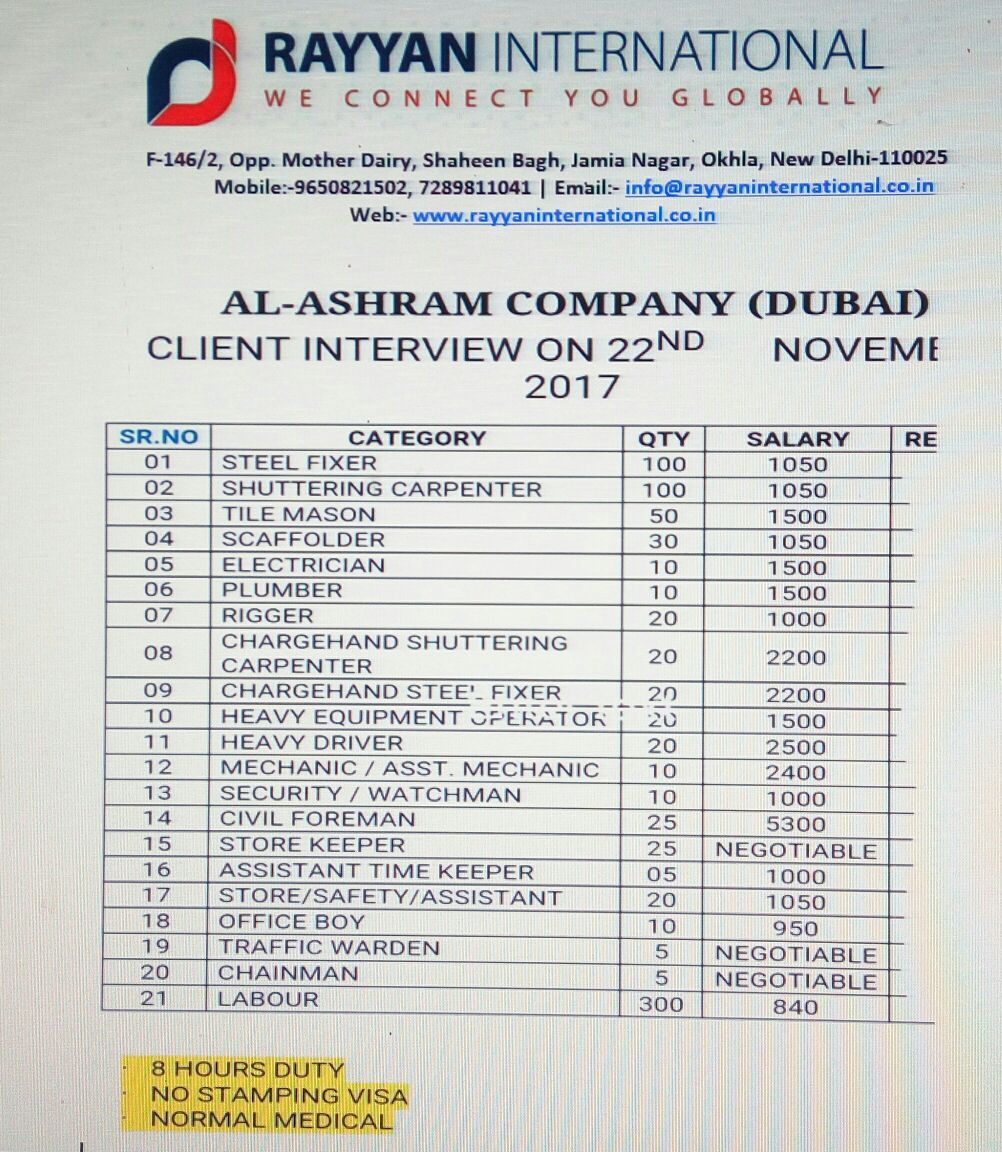
RAYYAN INTERNATIONAL

RAYYAN INTERNATIONAL


Getting a job in one of the Gulf Cooperative Council (GCC) member Countries, is not an easy process due to the increase of available talent in the region, the specialized experience required by employers, the formal / informal quotas on nationalities, the location of the candidate and employer, employer visa regulations, salary budgets sometimes linked to human capital markets, and other variables. The following tips will help you get the job you want in the GCC.
  1. Have a strategy and solid plan. Someone once said, “finding a job is a full-time job”, only you can get the job you want, don’t depend on others to get it for you. Develop a strategy, plan and execute it every day and make it count! Read about the latest tips, invest in yourself and if you need additional support, get it!
  2. Make sure your CV is up to mark. Review the content of your CV, present the most updated and relevant information, and remove outdated accomplishments that are no longer relevant. You are not writing a book, make the CV short, no more than 2 pages, and don’t cram information since it will make it difficult to read. Remove graphics such as logos which distract from the content. Don’t use bright colours or patterns. For GCC employers, include information such as your nationality, age, marital status, availability, reason for leaving employers, and introduce your employers.
  3. Stand out from the crowd. Sending your CV by email and asking to be contacted is not the most effective way to get a job. You need to network, you need to research the companies that are hiring, contact them, and ensure they review your profiles. You must find a way to contact the hiring decision makers and provide a brief summary of your experience through a phone call, a video, or in writing by email. The message needs to be no longer than 60 seconds and should state why you are the best person for the vacancy as well as request a meeting.
  4. Use your network and that of others you know. People are usually willing to help out a friend, a colleague, or an acquaintance so use the networks you have access to. To receive help, you must also give to others so share your knowledge, mentor others, help others reach a contact, and when you are in need, it will be easier to ask.
  5. Visit the country. If you are not in the country, visiting the country you are targeting can be an effective way of increasing your network, meeting employers and confirming that you are interested in working in the new environment. It’s not a holiday though, so you need to have a solid plan and objectives to be accomplished during your stay.
  6. Update your online profile, including your LinkedIn profile. Today, visuals and video presentations are easily accessible and can make a strong impact on employers and your network.
  7. Engage your employment references early. This means reconnecting with them, informing them that you are seeking new employment, and getting their advice and support if possible in your job search. You don’t want to be contacting your references only when you need them.
MGR Management Consulting (MGRMC) is a professional recruitment firm specialising in human capital global sourcing. The company is of Canadian origin now operating from Dubai, United Arab Emirates from the prestigious Jumeirah Lakes Towers Free Zone. MGRMC serves international clients by recruiting and engaging the best and brightest people for their business. The writer, Christians Cruz, is the Managing Director of MGR Management Consulting, and has more than 17 years experience providing talent acquisition and human capital solutions in Canada, and now, the GCC.
RECRUITMENT DRIVE FOR PETROCHEMICAL COMPANY

RECRUITMENT DRIVE FOR PETROCHEMICAL COMPANY


Getting a job in one of the Gulf Cooperative Council (GCC) member Countries, is not an easy process due to the increase of available talent in the region, the specialized experience required by employers, the formal / informal quotas on nationalities, the location of the candidate and employer, employer visa regulations, salary budgets sometimes linked to human capital markets, and other variables. The following tips will help you get the job you want in the GCC.
  1. Have a strategy and solid plan. Someone once said, “finding a job is a full-time job”, only you can get the job you want, don’t depend on others to get it for you. Develop a strategy, plan and execute it every day and make it count! Read about the latest tips, invest in yourself and if you need additional support, get it!
  2. Make sure your CV is up to mark. Review the content of your CV, present the most updated and relevant information, and remove outdated accomplishments that are no longer relevant. You are not writing a book, make the CV short, no more than 2 pages, and don’t cram information since it will make it difficult to read. Remove graphics such as logos which distract from the content. Don’t use bright colours or patterns. For GCC employers, include information such as your nationality, age, marital status, availability, reason for leaving employers, and introduce your employers.
  3. Stand out from the crowd. Sending your CV by email and asking to be contacted is not the most effective way to get a job. You need to network, you need to research the companies that are hiring, contact them, and ensure they review your profiles. You must find a way to contact the hiring decision makers and provide a brief summary of your experience through a phone call, a video, or in writing by email. The message needs to be no longer than 60 seconds and should state why you are the best person for the vacancy as well as request a meeting.
  4. Use your network and that of others you know. People are usually willing to help out a friend, a colleague, or an acquaintance so use the networks you have access to. To receive help, you must also give to others so share your knowledge, mentor others, help others reach a contact, and when you are in need, it will be easier to ask.
  5. Visit the country. If you are not in the country, visiting the country you are targeting can be an effective way of increasing your network, meeting employers and confirming that you are interested in working in the new environment. It’s not a holiday though, so you need to have a solid plan and objectives to be accomplished during your stay.
  6. Update your online profile, including your LinkedIn profile. Today, visuals and video presentations are easily accessible and can make a strong impact on employers and your network.
  7. Engage your employment references early. This means reconnecting with them, informing them that you are seeking new employment, and getting their advice and support if possible in your job search. You don’t want to be contacting your references only when you need them.
MGR Management Consulting (MGRMC) is a professional recruitment firm specialising in human capital global sourcing. The company is of Canadian origin now operating from Dubai, United Arab Emirates from the prestigious Jumeirah Lakes Towers Free Zone. MGRMC serves international clients by recruiting and engaging the best and brightest people for their business. The writer, Christians Cruz, is the Managing Director of MGR Management Consulting, and has more than 17 years experience providing talent acquisition and human capital solutions in Canada, and now, the GCC.

Monday, November 20, 2017

DOHA REQUIRED FOR A REPUTED MEP COMPANY

DOHA REQUIRED FOR A REPUTED MEP COMPANY


Students come to Hult to make a change, and for many that means getting a job in a new country. Hundreds of students succeed in finding employment abroad every year, 68% of our MBAs in 2015found jobs in a new country. And these students all have something in common: they worked hard to make their dream a reality.
Finding employment in a different country, especially in popular destinations like the U.S. and Europe, requires hard work, careful planning, and flexibility. And many of Hult’s students who do this are rewarded —75% of our international MBA students who studied in the U.S. last year found employment there after graduation.
Eduardo Sousa, a Hult alumni from Brazil, said:
 “I always wanted to work in the U.S., specifically in Boston – my Hult MBA helped me achieve my goal by developing my knowledge of the local market while building my network.”
Getting a job abroad isn’t easy, and simply attending any business school in your target destination is not a guarantee you will get a job there. Here are 7 strategies we’ve seen work the best for our students who found jobs in their target country:
  1. Prioritize the change that’s most important to you
Some students come to Hult wanting to change their industry or work function as well as their location. If you want to maximize your chances of success, pick the change you want most and focus all your efforts on that.
If location really is the most important thing to you, be prepared to stay in your old industry or function until you’ve established yourself in your new country. You are much more likely to get visa sponsorship if you have experience in the industry or role you’re applying for as your employer is taking less of a risk if you have a proven track record.
  1. Start your job-search early
Securing a job can take six months or more. Beating the odds means starting your job hunt as soon as possible so you’ve got time to get in front of the right employer.
Students who succeed start their job search early and arrive to school with a polished resume that’s properly-formatted and written in impeccable English, or the language of their target country. Their LinkedIn profiles lay out their professional experiences simply and clearly, highlighting their key skills. And their accompanying profile picture is appropriately professional. Hult’s Career Fast Track starts working with accepted students before they arrive in class in September. So students can arrive on campus with these tools already in place and can start job searching and networking on day one.
  1. Target less competitive cities
Students often have ambitions not just to secure a job in a particular country but in a particular city. Well-known cities like New York or London for example have a highly competitive job market. You will be competing against the best people from that country, as well as international talent.
Many cities are hungry for international talent. In the U.S. for example cities like Seattle and Austin have strong-growing job markets, are actively seeking international talent, and are considerably less competitive. It’s a similar story in the U.K. in cities like Manchester and in the U.A.E. for cities like Abu Dhabi.
  1. Target small and medium-sized companies
Many students make the mistake of thinking that the larger the company, the greater the chance of sponsorship. This is not necessarily the case. Multinational corporations are inundated with applications from international jobseekers, many of whom have a similar skill set. Smaller companies are looking for a highly unique talent pool and many are eager to hire multi-lingual international students to support foreign expansion.
Although smaller companies may only hire and sponsor one international student a year—it could be you if you have the skill set they’re looking for. It pays to think differently, avoid the “popular” companies, and connect with the small or medium-sized alternatives that may not recruit on university campuses, but who are looking for exactly the skills you’ve got.
  1. Leverage your existing network and tirelessly grow a new one
It’s been said countless times before but the fact remains true: it’s not what you know, it’s who you know. Your personal and professional network can yield great opportunities.
We’ve seen students successfully make the transition from their home country to target country by leveraging the contacts they already have at home. Does anyone in the company you used to work for know somebody in your target city? Any connection can help you get your foot in the door and start a conversation.
Hult provides students with frequent networking opportunities, through events like our Global Career Open House, corporate speakers and guests, real-world projects like the Hult Business Challenge, a network of 16,000+ alumni, and through the student body itself. Take full advantage of these opportunities while you’re studying but also seek out ways to network outside the school.
Our campuses’ central locations make Hult an ideal base for connecting with the businesses and professionals in the city and there will be more industry networking events available than you will be able to attend. Get out into the city and get networking. This can be challenging when you have a heavy workload but it’s well worth the effort.
  1. Position your unique skill set for your target job market
Students who land a foreign job and sponsorship tend to present unique skills that their future employers couldn’t fulfill.
As an example, some of the most in-demand industries in the U.S. are in fields we refer to as “STEM” (Science Technology, Engineering and Manufacturing). Additional examples of in-demand areas are: Android and mobile apps, digital marketing and social media, data analytics, including data visualization, statistics and Google Analytics. Other countries will have their own “most in demand” list.
A critical skill set that is in high demand is language skills, and knowledge of local markets. For example, in Dublin, Ireland, where many technology companies established offices to support sales in Europe, there is an acute demand for multi-lingual graduates for high-growth careers in business development and sales.
At Hult, we work with you one-on-one to help you understand what your unique strengths are and how to position yourself within a competitive global job market.
  1. Consider alternative entry paths 
There are several ways to get a job a in your target country other than to get sponsorship upon graduation.  It can mean playing the long game and returning a year or two down the line, but don’t give up if you don’t get a job in the location you want right away.
We’ve seen many students successfully gain employment in their target country by first getting a job with a multinational company in a region where there is high demand, and then transferring to the location they were originally targeting.  Some U.S. companies may even hire international candidates and train them in the U.S. during the 12 months they’re on OPT after graduation, before deploying them to work in another region.